

Office building lighting design:
Key to improving employee work health, morale, and work atmosphere
Office lighting design is often underestimated in office or office building design, yet it has a profound impact on employee health, morale, and work atmosphere. Many people mistakenly believe that "installing more recessed lights will make the space bright enough," but this idea is counterproductive. According to a survey by the American Society of Interior Designers (ASID), 68% of employees are dissatisfied with office lighting, which directly affects work efficiency and mental health. The comfort and functionality of lighting do not depend on the number of light fixtures, but rather on the distribution of light, color temperature, color rendering index (CRI), and precise design for different areas. Lighting not only provides illumination but also profoundly influences the atmosphere, shaping a professional, comfortable, or efficient office design experience, thereby improving employee health and morale. This article will explore office lighting design solutions, analyze common user pain points, explain the incorrect application of warm and white light, the importance of color temperature and CRI, and elaborate on the correct use of spotlights and diffused lights, as well as the impact of lighting on work atmosphere and morale. Through scientific data support, it will help you create a more productive office design.
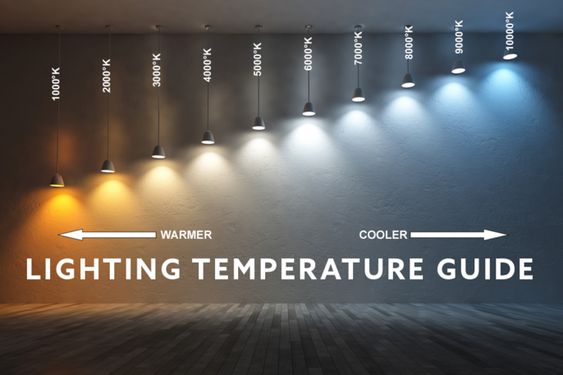
The incorrect application of yellow and white light can affect employees' work health.
In office building lighting design, color temperature (measured in Kelvin K) directly affects employee health, morale, and the work atmosphere. Incorrect application of warm light (approximately 2700K-3000K) and white light (approximately 4000K-6500K) can lead to the following problems:
- The problem with using overly warm yellow light in meeting rooms: While yellow light creates a cozy and relaxing atmosphere, its use in meeting rooms requiring high concentration can make employees drowsy, reduce discussion efficiency, and weaken the professional work atmosphere. Studies show that in offices lacking natural light or adequate artificial lighting, 47% of employees feel tired or extremely tired, affecting morale. Solution: Meeting rooms should use neutral white light of 4000K-5000K to simulate natural sunlight, promoting clear thinking and efficient communication, creating a professional and rigorous work atmosphere, and boosting employee morale.
- The problems with using overly cool white light in work areas: While overly cool white light (>6000K) may appear bright, prolonged use can lead to eye fatigue, headaches, and even make the space feel cold, reducing employee health and morale. Statistics show that most employees are dissatisfied with lighting quality, directly impacting work efficiency. Solution: It is recommended to use a color temperature of 3500K-4500K in work areas, combined with uniform lighting, to maintain brightness and comfort, creating an efficient yet non-oppressive work atmosphere and protecting employee health.
- The problem with using harsh white light in break areas: High color temperature white light in break areas can disrupt the relaxing atmosphere, preventing employees from effectively relieving stress and impacting their work health and morale. Research from Future Workplace indicates that one in three employees considers comfortable lighting crucial to their well-being. Solution: Break areas should use warm yellow light (2700K-3000K) combined with soft lighting to create a warm and comfortable working atmosphere that promotes employee relaxation.
- The problem of color distortion caused by insufficient color rendering index (CRI): In areas requiring precise color discrimination (such as design studios or product display areas), low CRI lighting can lead to color distortion, affecting work quality and customer perception, and indirectly reducing employee confidence and morale. Solution: Choose lighting fixtures with a CRI higher than 90 to ensure accurate color representation of objects, enhancing a professional image and work atmosphere.
These pain points are not only challenges in office design, but can also lead to impaired employee health and low morale—studies show that appropriate blue light-enhancing bulbs (17,000K) can improve work performance and alertness.

Why is the idea that "more lights = more light" a misconception in office design?
In office building design, over-reliance on recessed lighting to increase brightness is not only ineffective, but may also negatively impact employee health and work atmosphere.
- Recessed lights, a type of spotlighting, provide concentrated light and are suitable for localized illumination. However, if recessed lights are densely arranged on the ceiling, they can create a "spotlight effect" with alternating bright and dark areas, resulting in uneven visual distribution, a cluttered space, and a disruptive work atmosphere.
- Glare and reflections can interfere with office building design. Glass curtain walls, computer screens, or metal desktops are common features. If the angle of recessed lights is not right, the reflected light can create glaring spots, affecting the health of employees, causing eye discomfort, and reducing morale and work efficiency.
- Visual oppression and spatial clutter: Too many recessed lights make the ceiling look like a "honeycomb". The cutting of the light holes and the appearance of the light fixtures increase the visual clutter, reduce the sense of openness and professional image of the space, and weaken the positive work atmosphere.

The crucial role of lighting in work atmosphere and employee morale
Office lighting design not only provides illumination but also influences employee health and morale by shaping the atmosphere. ASID research shows that high-quality office design can significantly improve health, well-being, employee satisfaction, and job performance.
- A professional and efficient atmosphere boosts morale. Neutral white light (3500K-4500K) simulates natural sunlight, suitable for open-plan workspaces and meeting rooms, promoting employee focus and creating a professional and bright work environment. Even, diffused lighting makes the space appear spacious and clean, enhancing employee morale and the company's professional image.
- A warm and relaxing atmosphere promotes employee well-being. Warm yellow light (2700K-3000K) creates a cozy and comfortable working environment in rest areas or tea rooms, helping employees relax, relieve work stress, and promote their health. Soft, diffused lighting or light strips further enhance the welcoming atmosphere, making employees feel cared for and boosting morale.
- High-end brand image inspires employee confidence. In the reception area or exhibition area, high color rendering spotlights highlight the brand logo or product display, creating a high-end and sophisticated working atmosphere, enhancing employees' sense of belonging to the company and their self-confidence, and indirectly boosting morale.
- Flexible atmosphere switching adapts to diverse needs. Intelligent lighting systems can adjust color temperature and brightness according to time or activity. For example, neutral light can be used during the day to improve efficiency, while warm light can be switched to create a relaxing atmosphere at night. This allows office building designs to adapt to various scenarios, improving employee health and morale. The use of natural light can enhance alertness, visual comfort, and preference.
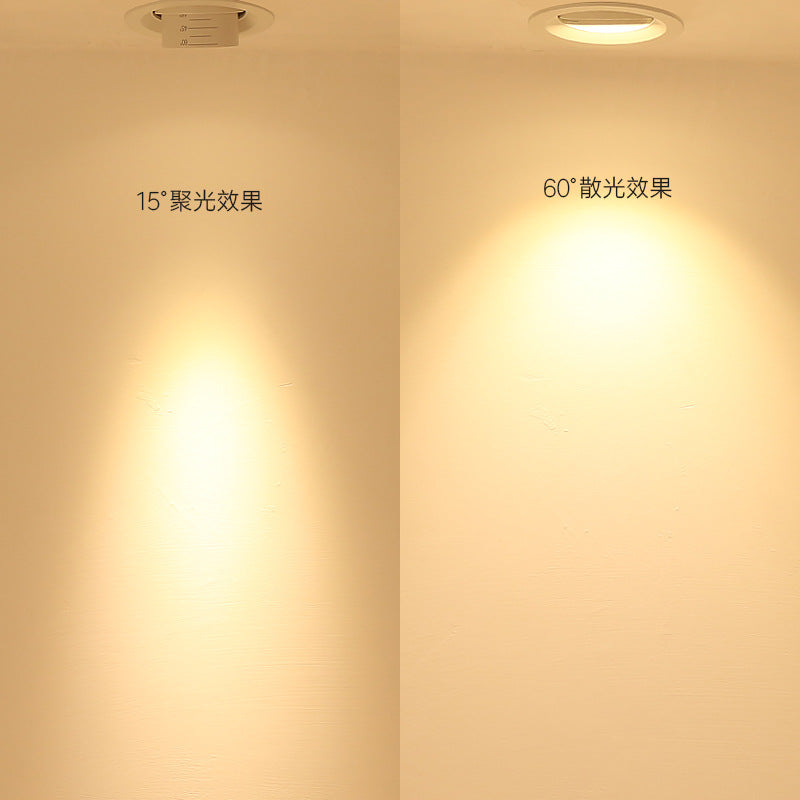
The correct use of spotlights and floodlights in office design
-
Spotlight
- Features : Concentrated light with a narrow angle (usually 10°-60°), suitable for highlighting specific areas or objects.
-
Application scenarios :
- Meeting Room: Use spotlights to focus on the conference table to ensure sufficient lighting (500-700 lumens/square meter), improve discussion efficiency, and create a professional working atmosphere.
- Reception or showroom area: Use adjustable spotlights or track lighting to highlight brand logos, product displays, or artwork, enhancing the upscale work atmosphere and employee morale.
- Design Studio: High color rendering index (CRI>90) spotlights accurately reproduce the colors of design works, enhancing professionalism and employee confidence.
- Precautions : Avoid densely packed spotlights, as this may cause glare or light spot effects, which can negatively impact employee health and the work atmosphere.
-
Diffuse lighting
- Features : Soft and even light with wide coverage, suitable for large-area lighting.
-
Application scenarios :
- Open-plan workspace : Use ceiling lights or linear lights to provide uniform diffused light with a color temperature of 3500K-4500K to ensure a bright space, reduce eye fatigue, and promote employee health and a highly efficient work atmosphere.
- Rest areas or tea rooms : Equipped with LED strips or wall lamps, using 2700K-3000K warm light, to create a warm and relaxing working atmosphere and boost employee morale.
- Corridors or public areas : Diffuse lighting ensures safe illumination, reduces shadows, and creates a spacious and comfortable feel.
- Precautions : The brightness of the diffused light should be moderate to avoid being too bright and dazzling or too dim and affecting its function, so as to ensure the health of employees at work.
Different Zone Lighting Design Schemes for Office Buildings
Modern office lighting design emphasizes layered lighting, dividing light sources into "basic light sources," "accent light sources," and "ambience light sources." This combines spotlights and diffused lights to create suitable working atmospheres for different functional areas, thereby improving employee well-being and morale.
-
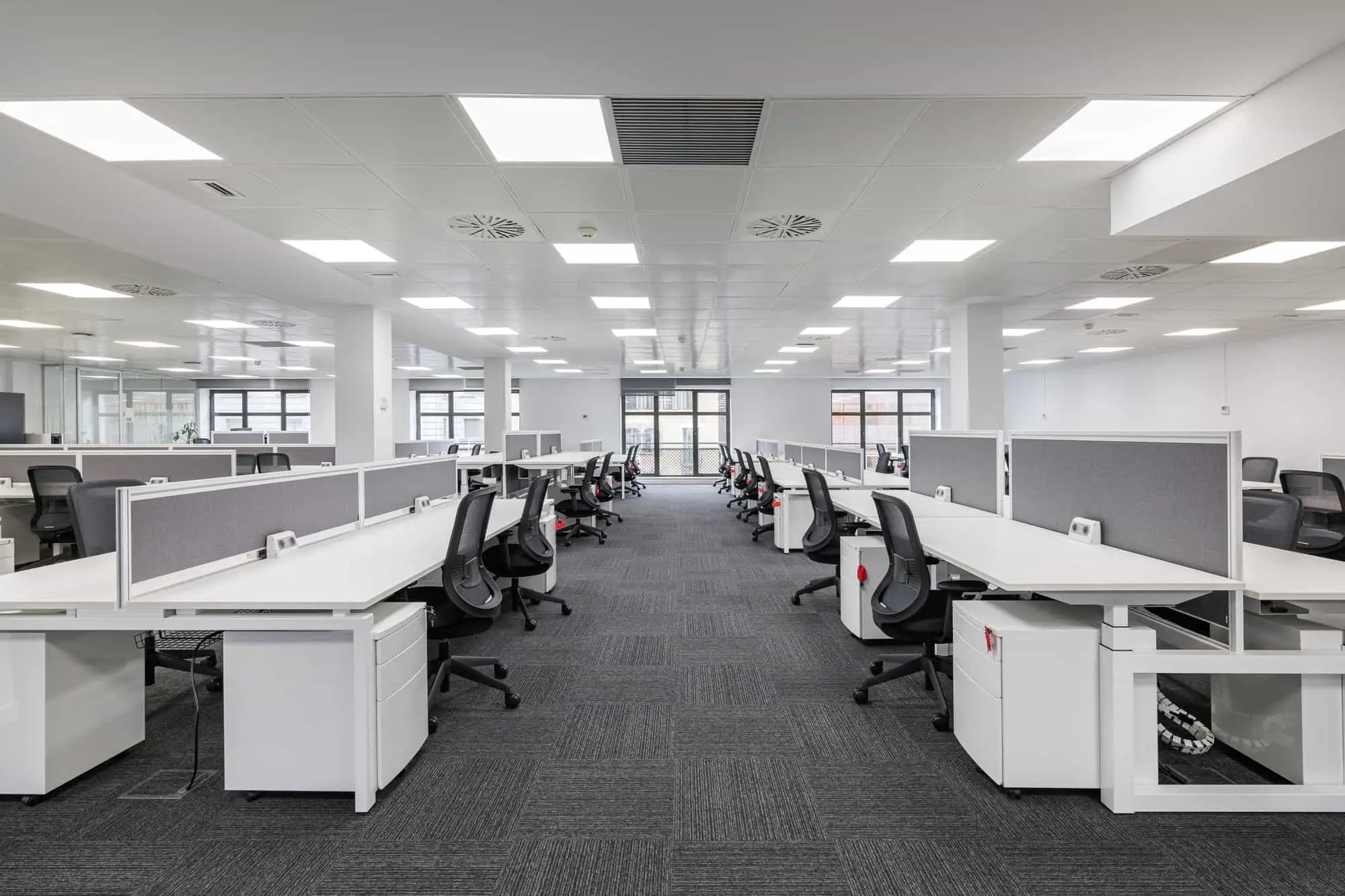
Open workspace
- Requirements : Even and bright lighting to reduce eye strain and improve work efficiency and morale.
- Recommendation : Use diffused ceiling lights or linear lights to provide uniform basic lighting, with a color temperature of 3500K-4500K and a color rendering index (CRI) > 90. Supplement with a few spotlights to highlight the work surface or whiteboard area.
- Atmosphere impact : Evenly diffused lighting creates a bright and efficient working atmosphere, avoids shadows that interfere with work, and protects employees' work health.
- Solution to pain points : Avoid excessively cold white light (>6000K) that may cause eye discomfort, and ensure that the light is soft and evenly distributed.
- Additional suggestion : Add a dimming function to adjust the brightness according to changes in sunlight, saving energy and improving employee health at work.

-
Meeting room
- Requirements : Clear, bright lighting to promote focus and effective communication.
- Recommendation : Use neutral white light of 4000K-5000K, combined with spotlight track lights or recessed lights to highlight the conference table, and diffused ceiling lights to provide overall illumination. Higher color temperature and illuminance can significantly improve cognitive performance.
- Atmosphere impact : The combination of neutral lighting and spotlights creates a professional and rigorous work atmosphere, boosting employee morale and discussion efficiency.
- Solution to the problem : Avoid yellow light (<3000K) that can cause drowsiness and ensure adequate lighting on the desktop.
- Additional suggestion : Use adjustable-angle spotlights to flexibly adjust the direction of the light according to the needs of the meeting.
-
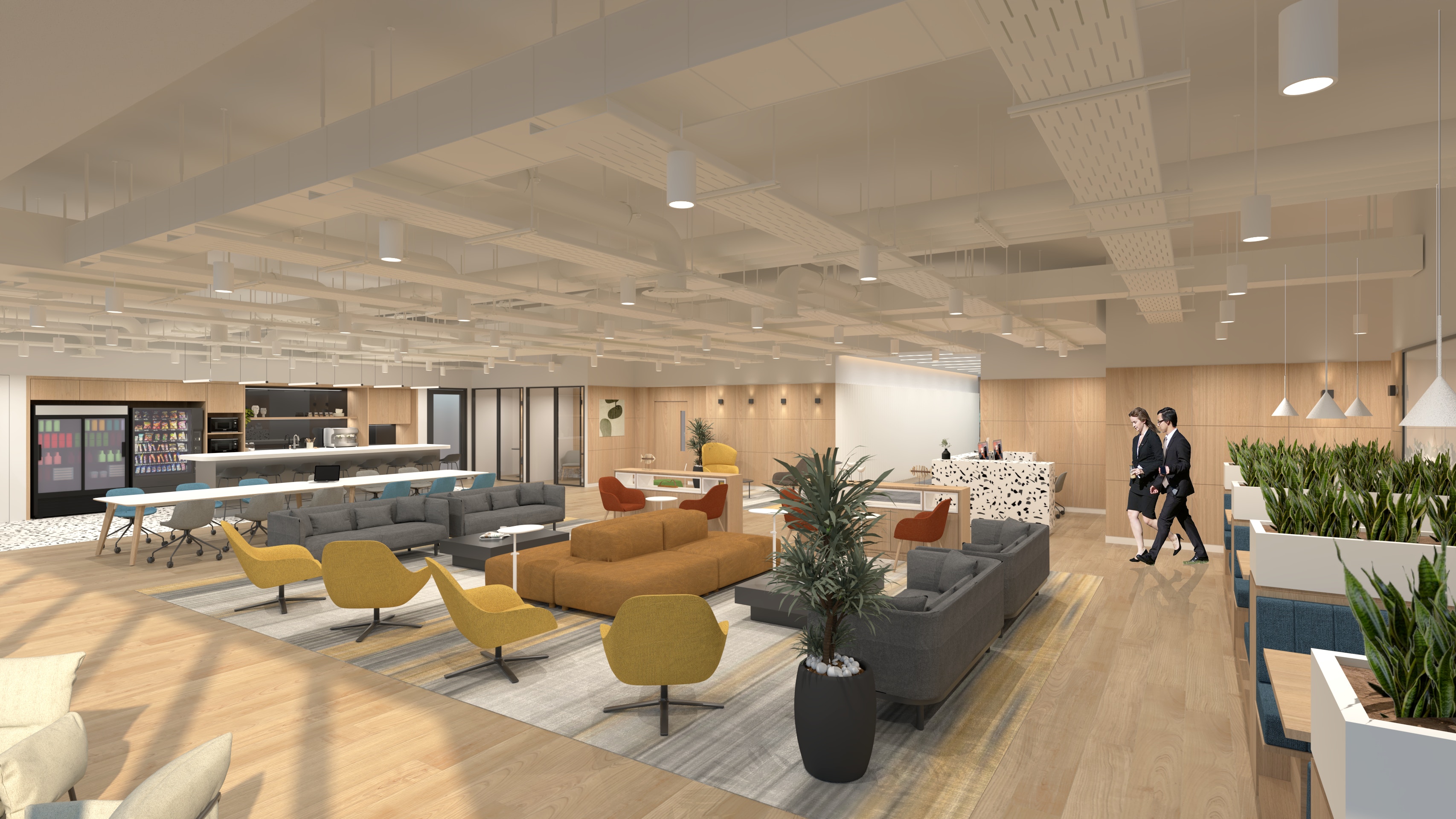
rest area or tea room
- Needs : A warm and relaxing atmosphere to help employees reduce stress and boost morale.
- Recommendation : Use warm yellow light of 2700K-3000K, paired with diffused light strips or wall lamps, to create a soft and layered feel.
- Atmosphere impact : The combination of warm and diffused light creates a warm and comfortable working atmosphere, promoting employee health and morale.
- Solution to the problem : Avoid glaring white light that disrupts the resting atmosphere by choosing low-brightness lighting fixtures (200-300 lumens/square meter).
- Additional suggestion : Add a smart lighting system that automatically switches color temperature based on the time of day (e.g., switch to warm light at night).
-
Reception area or exhibition area
- Needs : To project a professional image and showcase the company's brand or products.
- Recommendation : Use spotlights or recessed lights with a color temperature of 4000K and a color rendering index (CRI) > 90 for accent lighting, and supplement with diffused lights for background lighting.
- Atmosphere impact : Spotlighting highlights the brand or product, creating a high-end and sophisticated working atmosphere, and boosting employee morale and customer trust.
- Solution to pain points : Avoid low color rendering index (CRI) lighting fixtures that cause color distortion and affect customer perception.
- Additional suggestion : Use dimmable spotlights to flexibly adjust the angle and brightness of the light according to the content being displayed.
The crucial role of color temperature and color rendering index in office building design
-
Color temperature affects the perceived warmth or coolness of light and the working atmosphere.
- Warm light (2700K-3000K) : Suitable for rest areas, creating a warm and relaxing working atmosphere, and promoting employee health and morale.
- Neutral light (3500K-4500K) : Suitable for work areas or meeting rooms, simulating natural light to enhance focus and professionalism.
- Cool light (5000K-6500K) : Suitable for high brightness requirements, but prolonged use may make the space feel cold and affect the health of employees .
-
The Color Rendering Index (CRI) measures the ability of light to reproduce the true colors of an object.
- CRI>80 : Suitable for general office design environments, meeting basic lighting needs.
- CRI>90 : Suitable for design studios or showrooms, ensuring accurate color reproduction and enhancing a professional work atmosphere and employee morale.
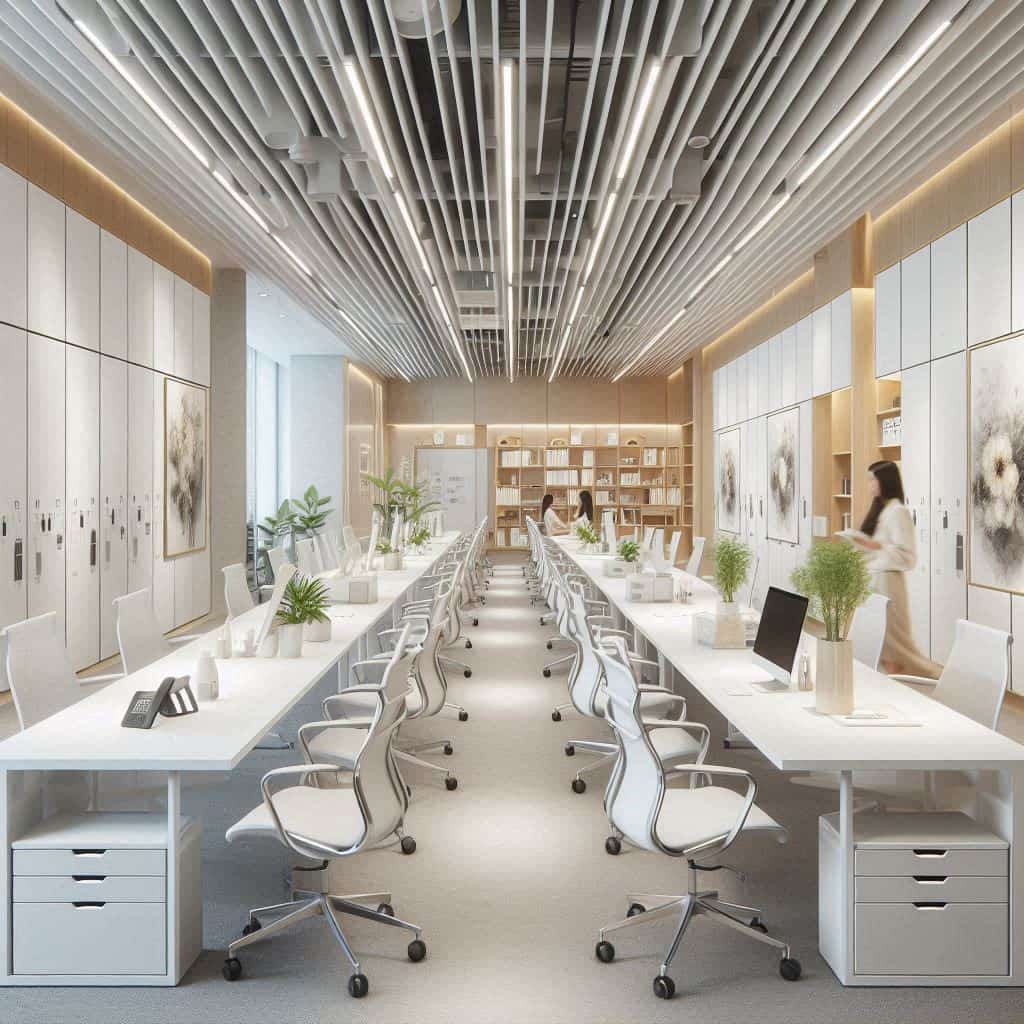
The right office lighting design: layering and functionality
Office building lighting design should focus on layered lighting, combining spotlights and diffused lights, and selecting light sources according to the functional areas and work atmosphere requirements.
- Basic light source : Diffuse ceiling lights or linear lights provide uniform illumination, ensuring the overall space is bright and promoting employee health.
- Key lighting : Spotlights, recessed lights, or track lights highlight key areas such as workbenches and display areas to enhance the sense of professionalism.
- Ambient lighting : LED strips, wall lamps, or floor lamps add soft layers and create a comfortable or upscale working atmosphere.
This layered design is not only more energy-efficient than a single, large number of recessed lights, but also allows for flexible adjustment of the lighting style. For example, neutral light can be used during the day to improve work efficiency, while switching to warm light during lunch breaks or in the evening creates a relaxing work atmosphere, improving employee health and morale. The combination of natural light and greenery can also enhance mood and mental well-being.